What Makes Vacuum Suction Cups the Essential Gripping Component in Smart Factories?
On the floor of a modern automotive assembly plant, a robotic arm moves with fluid precision. It approaches a sheet of glass, pauses momentarily, and then lifts it effortlessly using a set of circular rubber attachments. The glass is transported, rotated, and placed with millimeter accuracy onto a production line. The component responsible for this seemingly simple yet critical operation is the vacuum suction cup. This unassuming device, often overlooked in the grand narrative of industrial automation, is one of the most essential gripping components in today's smart factories. Without it, the handling of delicate, non-porous, and flat materials would be slow, inefficient, and prone to damage.
Vacuum suction cups, also known as vacuum pads, are the primary gripping tools used in automated material handling systems. They are the workhorses of the smart factory, responsible for picking, placing, and manipulating a vast range of products, from heavy glass panels and metal sheets to delicate electronic components and food items. Their importance has only grown with the rise of Industry 4.0, where flexibility, speed, and precision are paramount. A vacuum suction cup can handle objects of varying sizes, shapes, and surface finishes with remarkable ease. It can be activated and deactivated almost instantly, enabling high-speed automated processes. It can be integrated into complex robotic systems and programmed to perform a wide array of tasks. This article will explore the technology, design, and applications of vacuum suction cups, explaining why they are an indispensable component of any smart factory.
Table of Contents
- 1. What Are Vacuum Suction Cups and How Do They Work?
- 2. Why Are Vacuum Suction Cups Critical for Smart Factory Automation?
- 3. What Material and Design Options Are Available for Vacuum Suction Cups?
- 4. What Technical Specifications Define a High-Performance Vacuum Suction Cup?
- 5. How Are Vacuum Suction Cups Integrated into Robotic Systems?
- 6. How to Select the Right Vacuum Suction Cup for Your Application?
- 7. Frequently Asked Questions (FAQ)
- 8. Conclusion
1. What Are Vacuum Suction Cups and How Do They Work?
At its core, a Vacuum Suction Cup is a device that uses the pressure difference between the atmosphere and a vacuum chamber to grip and hold an object. The principle is simple yet powerful. When a vacuum suction cup is placed against a smooth, non-porous surface, the air between the cup and the surface is evacuated, creating a partial vacuum. The atmospheric pressure outside the cup then presses the cup against the surface, creating a gripping force. This force can be surprisingly large—a single vacuum suction cup with a diameter of 150 mm can generate a holding force of over 500 N at a vacuum level of -80 kPa.
The basic construction of a vacuum suction cup is a flexible cup (typically made of rubber or polyurethane) that seals against the object's surface. The cup is connected to a vacuum generator, which is either a central vacuum system or a dedicated vacuum pump. A valve controls the flow of air, allowing the vacuum to be applied or released. In a smart factory, this entire process is automated, with the vacuum system being controlled by the machine's programmable logic controller (PLC) or a robotic control system.
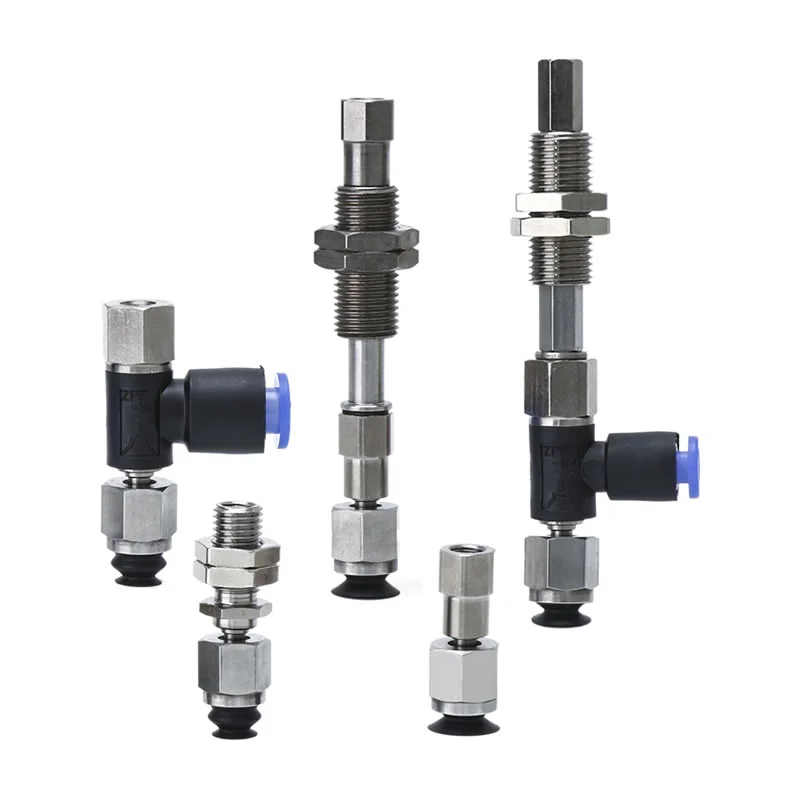
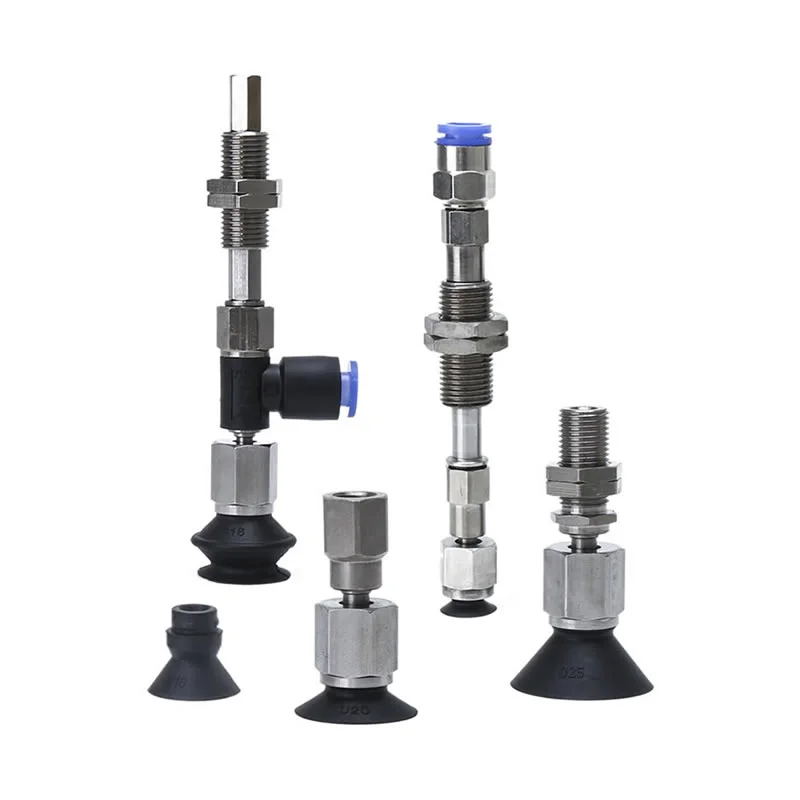
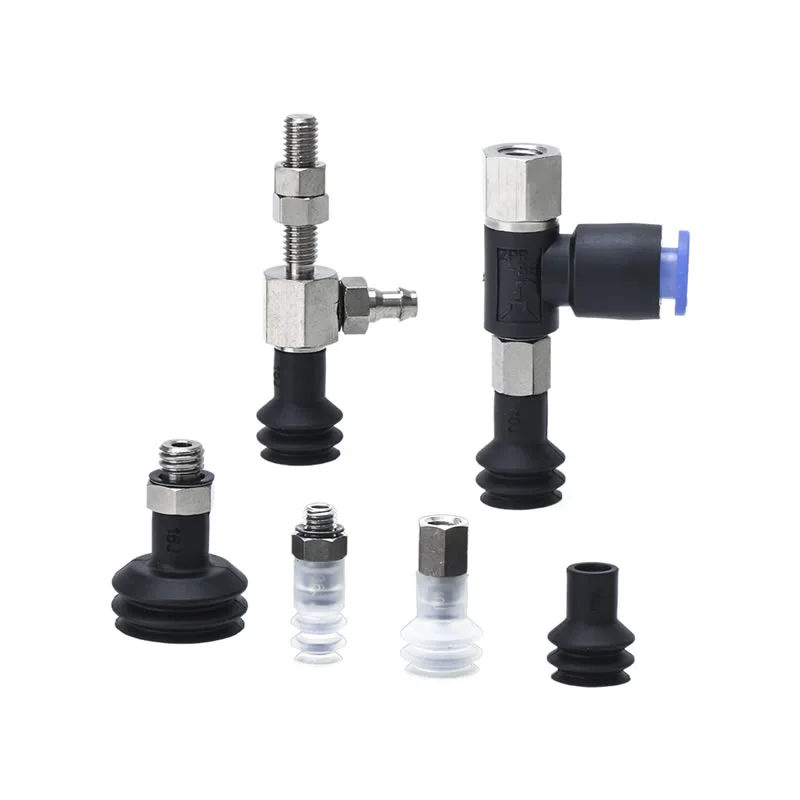
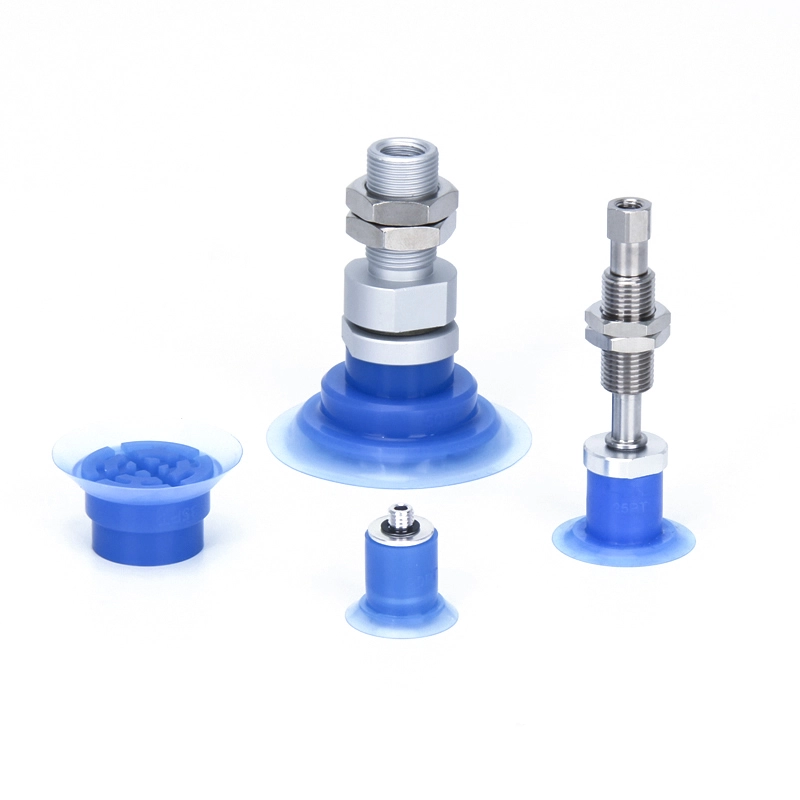
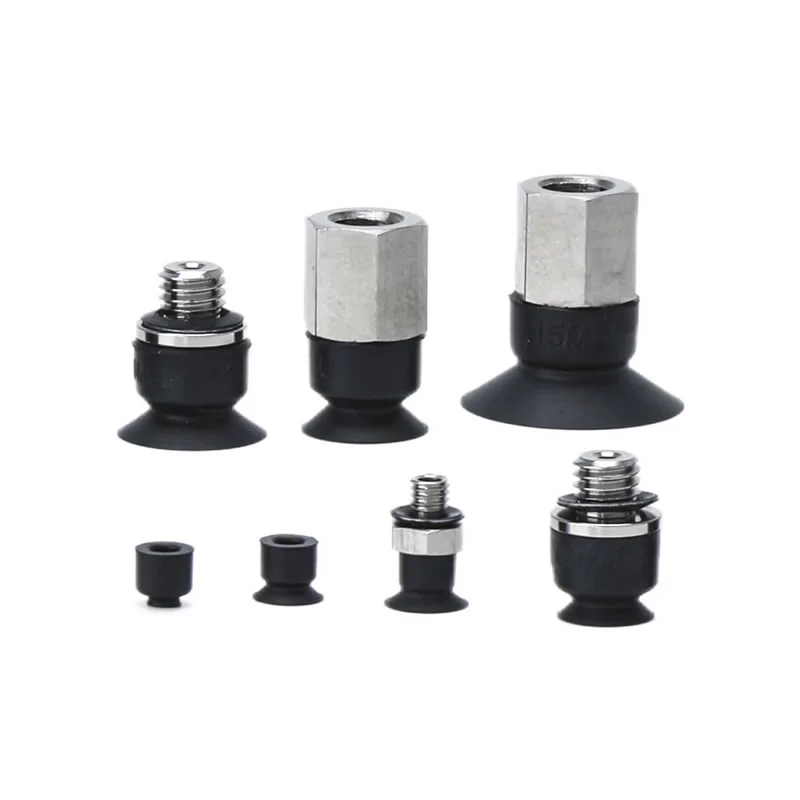
The concept of using vacuum for gripping is not new, but its application in smart factories has been refined by advanced materials, precise manufacturing, and sophisticated control systems. Modern vacuum suction cups are designed with specific materials and shapes to meet the demands of particular applications. For instance, a cup used for handling oily metal sheets might use an oil-resistant rubber, while a cup for handling delicate electronics might use a softer, non-marking material. The shape of the cup can vary from flat and round to oval and multi-bellows, each designed for different types of objects and gripping situations. At Zhejiang Comma Electric Co., Ltd., we have been manufacturing high-quality Vacuum Pads Vacuum Suction Cups for over a decade, ensuring that our products meet the rigorous demands of modern automation. Our cups are designed to provide reliable, consistent, and durable gripping, even in the toughest industrial environments.
2. Why Are Vacuum Suction Cups Critical for Smart Factory Automation?
Vacuum suction cups have become indispensable in smart factories due to their unmatched combination of speed, precision, flexibility, and safety. In the context of Industry 4.0, where production lines are expected to be highly adaptable and efficient, vacuum suction cups provide the perfect solution for material handling tasks. One of the primary reasons for their importance is their ability to handle a wide range of materials without causing damage. Unlike mechanical grippers, which can crush or scratch delicate surfaces, vacuum suction cups apply a uniform pressure over the contact area, distributing the gripping force evenly. This makes them ideal for handling sensitive materials such as glass, plastics, painted surfaces, and electronic components.
The second key advantage is speed. Vacuum suction cups can be activated and deactivated in milliseconds, allowing for extremely fast pick-and-place cycles. A typical vacuum suction cup can achieve a 90% vacuum level in under 100 milliseconds, enabling the rapid handling of products in high-speed manufacturing lines. This is critical in applications such as packaging, where throughput is the primary metric of success. The ability to release the object instantly also means that the cups can be quickly repositioned for the next task, further increasing efficiency. In our factory, we have observed production lines where the use of vacuum suction cups increased the throughput by over 30% compared to mechanical grippers.
Thirdly, vacuum suction cups offer exceptional flexibility. A single type of cup can be used to handle a variety of objects with different sizes, shapes, and weights, simply by adjusting the vacuum level. This makes them ideal for the highly variable production runs that are common in smart factories. The ability to change the gripping pressure or the cup's orientation through robotic control allows for a single robotic system to handle thousands of different product variations. This is why vacuum suction cups are an integral part of advanced robotic systems used in assembly, packaging, and palletizing. They enable the flexibility and speed required for mass customization and the production of small batch sizes.
The table below summarizes the key advantages of vacuum suction cups in smart factory automation.
| Advantage | Description | Impact on Smart Factory |
| Gentle Handling | Uniform pressure distribution, no scratching or crushing | Reduced product damage, improved quality |
| High Speed | Fast activation/deactivation (milliseconds) | Increased throughput, higher productivity |
| Flexibility | Adaptable to different sizes, shapes, and materials | Enables mass customization and variable production runs |
| Cost-Effective | Low maintenance, long service life | Reduced operating costs, higher ROI |
| Safety | Gentle gripping, no mechanical pinch points | Improved operator safety, reduced workplace injuries |
3. What Material and Design Options Are Available for Vacuum Suction Cups?
The selection of the right vacuum suction cup material and design is a critical factor in ensuring optimal performance in a smart factory environment. The correct choice can significantly enhance the cup's gripping force, durability, and suitability for a specific application. The material of the cup determines its flexibility, resistance to wear and chemicals, and its ability to conform to the surface of the object. The design of the cup, including its shape, size, and sealing lip, determines its gripping characteristics, such as the maximum holding force, the speed of lifting, and the ability to handle objects with irregular surfaces.
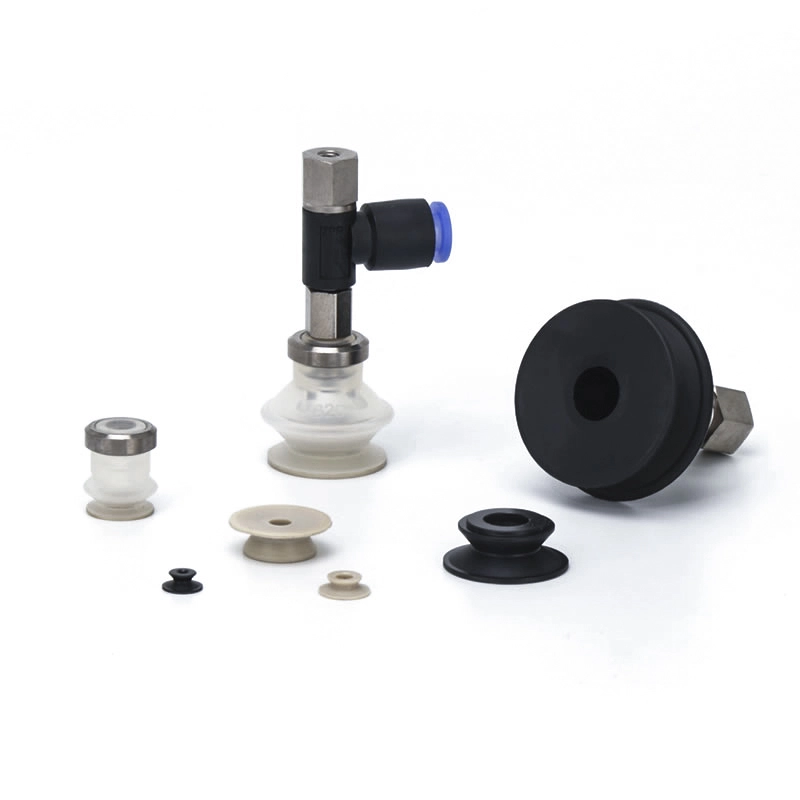
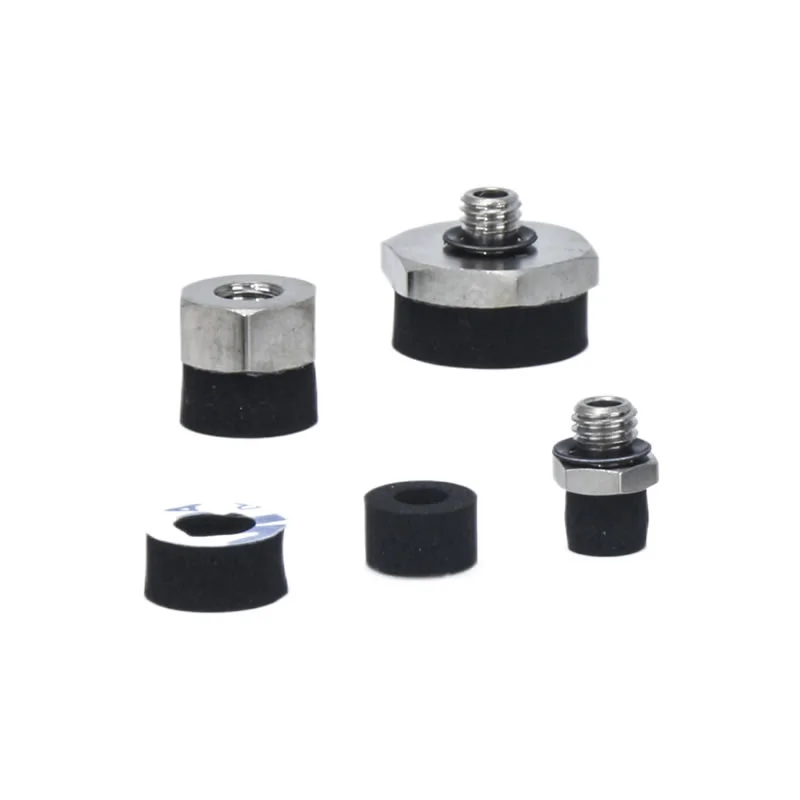
The most common materials for Vacuum Pads Vacuum Suction Cups are nitrile rubber (NBR), silicone rubber, polyurethane (PU), and Viton (fluorocarbon rubber). NBR is the most widely used material due to its excellent resistance to oil, grease, and abrasion, making it suitable for applications in the automotive and metalworking industries. Silicone rubber offers excellent temperature resistance, flexibility, and non-stick properties, making it ideal for handling hot objects or food products. Polyurethane provides exceptional wear resistance and durability, suitable for handling heavy or abrasive materials. Viton is used in applications involving high temperatures or aggressive chemicals, such as those found in the semiconductor or chemical processing industries.
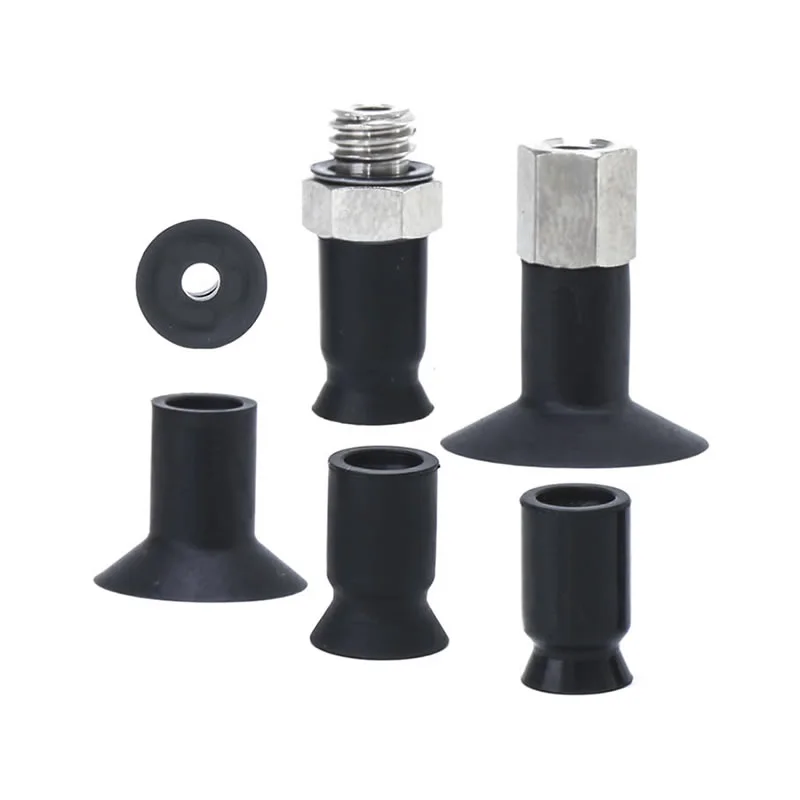
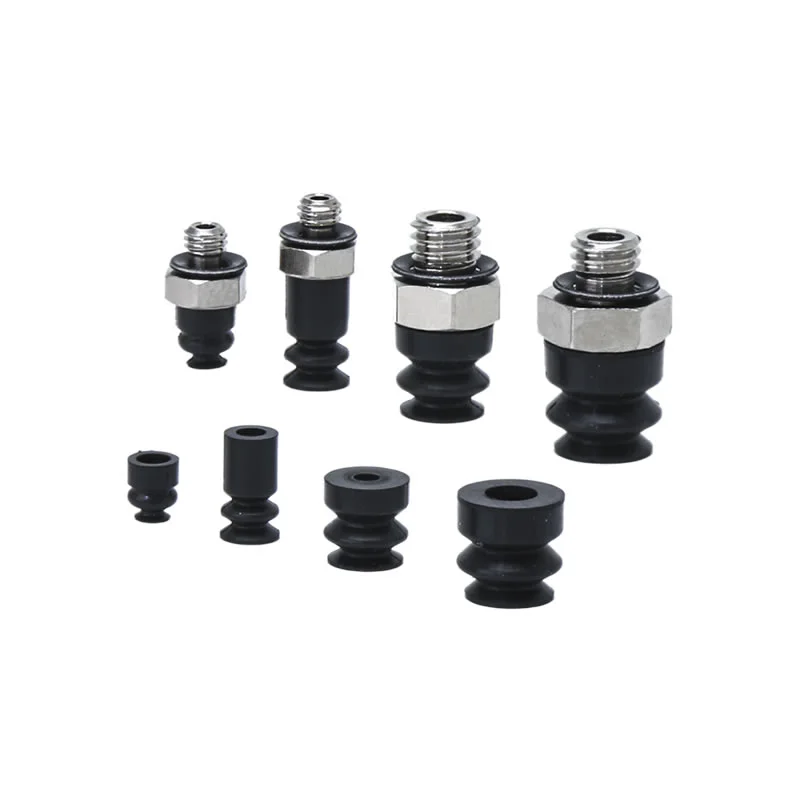
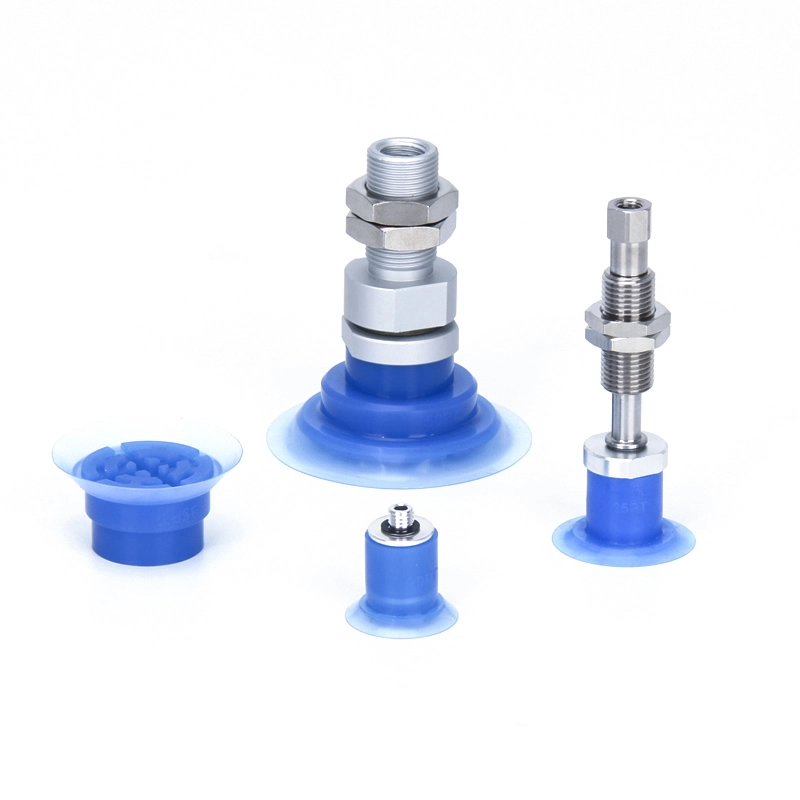
The design of the cup is equally important. The most common shapes are the flat cup, which is used for handling flat, smooth surfaces such as glass or metal sheets; the bellows cup, which has a flexible, accordion-like structure that allows it to compensate for height variations and handle objects with uneven surfaces; the oval cup, which is designed for handling long, narrow objects; and the deep cup, which is used for gripping objects with deep cavities. The sealing lip is the portion of the cup that makes contact with the object, and its design is critical for creating an effective seal. The lip can be single or multi-layered, with a variety of profiles designed to provide maximum grip. At Zhejiang Comma Electric Co., Ltd., we offer a comprehensive range of vacuum suction cups in various materials and designs to meet the needs of any smart factory application. Our cup designs are optimized for maximum grip and minimal wear, ensuring a long and reliable service life.
The table below provides a comparison of the common materials used in Vacuum Pads Vacuum Suction Cups.
| Material | Key Properties | Typical Applications |
| Nitrile Rubber (NBR) | Oil-resistant, abrasion-resistant, durable | Automotive parts, metal sheets, oily surfaces |
| Silicone Rubber | Temperature-resistant, non-stick, flexible | Food processing, hot objects, electronic components |
| Polyurethane (PU) | Wear-resistant, high strength, durable | Heavy loads, abrasive materials, packaging |
| Viton (FKM) | Chemical-resistant, high-temperature resistant | Chemical processing, semiconductor industry |
4. What Technical Specifications Define a High-Performance Vacuum Suction Cup?
To ensure reliable and efficient operation in a smart factory, a vacuum suction cup must meet a set of specific technical criteria. These parameters define the cup's performance, its compatibility with the automation system, and its suitability for the application. The key technical specifications for Vacuum Pads Vacuum Suction Cups include the holding force, the volume flow rate, the response time, the maximum vacuum level, and the cup's size and dimensions. Each of these factors must be carefully considered to ensure that the cup can perform its intended task effectively and reliably.
The holding force is the most critical specification. It is the maximum force that the suction cup can exert on an object without breaking the seal. The holding force is determined by the cup's diameter, the vacuum level, and the coefficient of friction between the cup material and the object's surface. A cup with a larger diameter will have a larger contact area and therefore a higher holding force. The vacuum level is typically expressed as a negative pressure in kilopascals (kPa). A vacuum level of -80 kPa is common. The coefficient of friction is affected by the material of the cup and the nature of the object's surface. For example, a cup made of soft rubber will have a higher coefficient of friction on a smooth surface than a cup made of hard plastic.
Another key specification is the volume flow rate. This is the amount of air that the vacuum generator can evacuate from the cup per unit of time. A higher volume flow rate allows the cup to achieve the required vacuum level faster, which is essential for high-speed applications. The response time is the time it takes for the cup to reach a specified vacuum level. A fast response time is critical for applications where speed is of the essence, such as pick-and-place operations. The maximum vacuum level is the highest vacuum that the cup can withstand without collapsing. The cup's size and dimensions include the diameter, the height, and the mounting thread size. These dimensions must be compatible with the rest of the automation system.
The table below provides typical values for the key specifications of a standard Vacuum Pads Vacuum Suction Cup.
| Specification | Typical Value | Impact on Performance |
| Holding Force (at -80 kPa) | 10 - 500 N | Determines the maximum weight the cup can lift |
| Vacuum Level | -60 to -90 kPa | Higher vacuum = higher holding force |
| Volume Flow Rate | 0.5 - 5 L/min | Faster flow = faster activation |
| Response Time | 30 - 100 ms | Faster response = faster cycle times |
| Diameter | 10 - 200 mm | Larger diameter = higher holding force |
| Mounting Thread | M5, M8, G1/4, G3/8 | Determines compatibility with system |
When selecting a Vacuum Suction Cup, it is essential to match these specifications to the requirements of the application. At CommaELEC, we provide detailed technical data sheets for all of our Vacuum Pads Vacuum Suction Cups, enabling our customers to make informed decisions. Our expert team can also provide guidance on selecting the appropriate cup for a specific application.
5. How Are Vacuum Suction Cups Integrated into Robotic Systems?
In a smart factory, vacuum suction cups are often integrated into robotic systems to provide automated material handling. The integration of suction cups with robotics is a sophisticated process that requires careful attention to the mechanical, electrical, and control system interfaces. The cups are typically mounted on the end effector of the robot arm, which is the device that interacts with the objects. The vacuum generator and control system are usually located near the robot base, and the vacuum lines are routed through the robot arm to the cups.
The integration process begins with selecting the appropriate suction cups for the application. The cups must be matched to the weight, size, and material of the objects to be handled. The mounting system must be designed to ensure that the cups are securely attached to the robot arm and are properly aligned with the objects. The vacuum generator is connected to the power supply and the control system. The control system is programmed to activate the vacuum when the cups make contact with the object, and to release the vacuum when the object is in the desired position. In advanced applications, a pressure sensor is also integrated to provide feedback on the vacuum level and detect any leaks or anomalies.
Modern robotic systems often use a combination of vacuum suction cups and other gripping technologies. For example, a robot arm might use vacuum suction cups to lift a large, flat sheet of material, and then use a mechanical gripper to hold it in place for a secondary operation. The control system must coordinate the actions of both gripping systems to ensure smooth and efficient operation. The integration of vacuum suction cups with robotic systems is made easier by the development of standardized interfaces and protocols. Many vacuum manufacturers, including CommaELEC., offer cups with ISO-standard mounting features that are compatible with a wide range of robot end effectors. This standardization reduces the complexity and cost of integration and ensures interoperability.
At our factory, we have seen how the integration of Vacuum Pads Vacuum Suction Cups with robotic systems has revolutionized many manufacturing processes. For example, one of our customers, a manufacturer of solar panels, uses a robotic arm fitted with custom-designed vacuum cups to handle the fragile glass panels. The cups are specially designed to be soft and non-marking, ensuring that the panels are not damaged during handling. The robot is programmed to pick up the panels from a conveyor, inspect them, and place them into a packaging system. This fully automated process has increased the plant's throughput by 20% and reduced product damage by over 80%. This is a testament to the critical role that vacuum suction cups play in smart factory operations.
6. How to Select the Right Vacuum Suction Cup for Your Application?
Choosing the correct Vacuum Suction Cup for a specific application is a critical decision that affects the performance, reliability, and efficiency of the automation system. The selection process involves a systematic evaluation of the application requirements and the cup's characteristics. The key considerations are the material to be handled, the weight and size of the object, the surface condition, the environment, and the desired cycle time. A wrong selection can lead to poor gripping performance, product damage, and reduced productivity.
The first step is to identify the object's material and weight. Is the object heavy or light? Is it flat or curved? Is it porous or non-porous? These factors will influence the required holding force and the type of suction cup required. For flat, smooth, and non-porous surfaces such as glass, metal sheets, and plastic panels, a simple flat cup will often suffice. For curved or flexible surfaces, a bellows cup is preferred. For heavy objects, a larger cup or a multi-cup arrangement may be needed. The second step is to consider the surface condition. Is the object oily, dusty, or wet? The surface condition can affect the seal of the cup and the holding force. For oily surfaces, an oil-resistant NBR cup is recommended. For dusty or wet surfaces, a cup with a more robust sealing lip is needed.
The third step is to evaluate the environment. Is the application in a cleanroom, a food processing plant, or a harsh industrial environment? For cleanroom applications, cups made from non-particulating materials such as silicone are preferred. For food processing applications, cups that are compliant with FDA regulations are required. For harsh industrial environments, cups made from durable materials such as polyurethane are recommended. The fourth step is to consider the cycle time. For high-speed operations, a cup with a fast response time is essential. This requires a vacuum system with a high volume flow rate and a cup with a low internal volume. The final step is to consider the mounting and connection options. The cup must be compatible with the robotic system or the end-of-arm tooling. The following table provides a selection guide based on common application scenarios.
| Application | Recommended Cup Type | Recommended Material | Special Considerations |
| Flat glass sheets | Flat cup, large diameter | Non-marking, soft rubber | Multiple cups for stability |
| Oily metal parts | Flat cup, oil-resistant lip | NBR (oil-resistant rubber) | Good sealing lip design |
| Curved plastic panels | Bellows cup | Silicone or polyurethane | Flexible bellows for compliance |
| Food products | Flat or bellows cup | Silicone (FDA compliant) | Non-stick surface, easy cleaning |
| High-temperature applications | Flat or bellows cup | Viton or high-temp silicone | Temperature-resistant materials |
| Porous surfaces (e.g., cardboard) | Flat cup with sealing lip | Soft rubber | Higher vacuum level required |
7. Frequently Asked Questions (FAQ)
Question 1: What is the difference between a vacuum suction cup and a mechanical gripper?
Answer: A vacuum suction cup uses the pressure difference between the atmosphere and a vacuum to grip an object, applying a uniform force over the contact area. This is ideal for handling delicate, flat, or non-porous materials. A mechanical gripper uses physical fingers or jaws that clamp onto the object. Mechanical grippers are suitable for handling irregularly shaped objects, heavy loads, and objects with rough surfaces. The choice between the two depends on the application's specific requirements. At Zhejiang Comma Electric Co., Ltd., we offer a wide range of vacuum suction cups that can be integrated with mechanical grippers for hybrid gripping solutions.
Question 2: Can vacuum suction cups handle objects with rough or porous surfaces?
Answer: Handling rough or porous surfaces with vacuum suction cups is challenging because air can leak through the surface, reducing the vacuum level and the holding force. For these applications, cups with specialized sealing lips, higher vacuum levels, or larger diameters may be required. In some cases, a porous object can be handled by using a vacuum cup that has a higher vacuum flow rate. However, for highly porous objects, alternative gripping methods may be more suitable. Our technical team can recommend the appropriate cup for your application.
Question 3: How long do vacuum suction cups typically last in an industrial environment?
Answer: The service life of a vacuum suction cup depends on the material, the application, and the environmental conditions. In a typical industrial setting, a high-quality cup can last for 6 to 12 months with regular use. Factors that can reduce the life of the cup include contact with oil or chemicals, exposure to UV light, abrasion from rough surfaces, and high temperatures. Regular inspection and replacement of the cups are essential to ensure reliable operation. Our Vacuum Pads Vacuum Suction Cups are designed for durability, but we recommend periodic inspection to maintain optimal performance.
Question 4: How do I calculate the required holding force for a vacuum suction cup?
Answer: The required holding force is determined by the weight of the object, the safety factor required, and the orientation of the object during handling. The holding force must be greater than the weight of the object, but it should also account for forces such as acceleration, deceleration, and any external forces such as wind or vibration. A safety factor of 2 to 3 is typically recommended to ensure reliable gripping. The holding force of a vacuum suction cup is calculated using the formula: F = (vacuum pressure) x (effective area). Our technical team can assist with this calculation.
Question 5: Can vacuum suction cups be used in cleanroom environments?
Answer: Yes, vacuum suction cups can be used in cleanroom environments. For cleanroom applications, cups made from non-particulating materials such as silicone or EPDM are preferred. These materials do not shed particles, which can contaminate the cleanroom environment. The cups should also be designed to be easy to clean and resistant to the cleaning agents used in the cleanroom. At Zhejiang Comma Electric Co., Ltd., we offer a range of vacuum suction cups that are suitable for cleanroom use and are manufactured to strict quality standards.
8. Conclusion
Vacuum suction cups are far more than simple rubber components; they are the essential gripping elements that enable the automation, flexibility, and speed demanded by modern smart factories. Their ability to handle a wide range of materials gently, rapidly, and precisely makes them indispensable for a vast array of applications, from automotive manufacturing and electronics assembly to packaging and food processing. The technology has evolved significantly, with advanced materials and designs providing solutions for even the most challenging gripping tasks.
Selecting the right vacuum suction cup requires a careful assessment of the application's requirements, including the material, weight, surface conditions, and environmental factors. By following a systematic selection process, engineers and automation specialists can ensure that the cups they choose provide reliable and efficient performance. At Zhejiang Comma Electric Co., Ltd., we are committed to providing high-quality Vacuum Pads Vacuum Suction Cups that meet the highest standards of performance and durability. Our extensive product range, combined with our technical expertise, allows us to offer solutions for virtually any application.
Contact Zhejiang Comma Electric Co., Ltd. today to learn more about our comprehensive range of vacuum suction cups and how they can enhance your smart factory operations.
Previous :
-
Related News
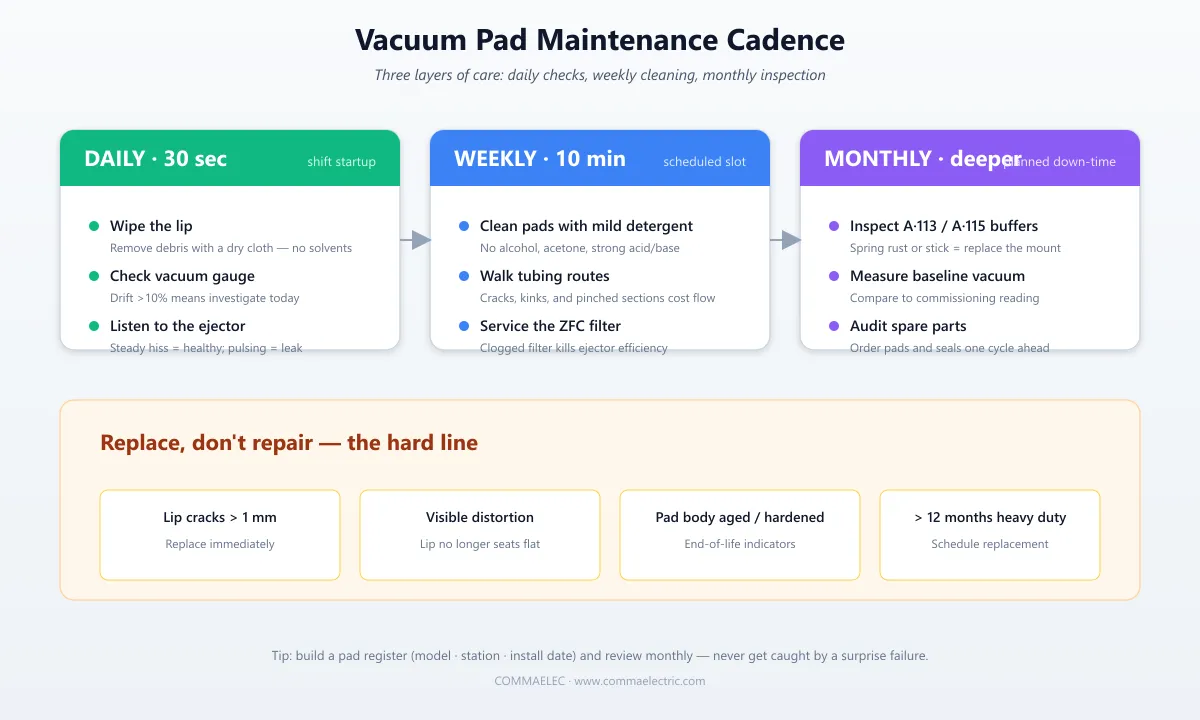
- Vacuum Pad Maintenance: A Practical Care Guide for Newcomers to Vacuum Handling
- Why Are Short-type Vacuum Suction Cups ZP2-MU Becoming a Smart Choice for Precision Automation
- Why Are No Spring Buffer Sponge Vacuum Suction Cups ZP2 a Smart Choice for High-Precision Automation
- How Can For Film Adsorption Vacuum Suction Cups ZP3P-PT Improve Flexible Film Handling in Industrial Automation
- How Can Bellows Vacuum Suction Cups ZP2-MB Improve Precision Handling Performance in Automated Systems
- How Can Low Friction Direct Mounting Vacuum Suction Cups ZP3 Improve Precision and Efficiency in Modern Automation Systems
Leave me a message