Buffer Stroke Selection for Vacuum Pads: Spring vs Spring-Free
The moment a vacuum pad sets a workpiece down is the most impact-intensive point of every handling cycle. At typical pick-and-place speeds of 100–500 mm/s, a hard landing without any buffer bruises and cracks the suction cup lip prematurely — across failure statistics, mechanical lip damage accounts for more than half of all suction cup replacements. The buffer's job is to absorb positioning errors before touchdown. Industry-standard buffer stroke sizes are 6, 10, 15, 20, 25, 30, 40, 50, and 100 mm.
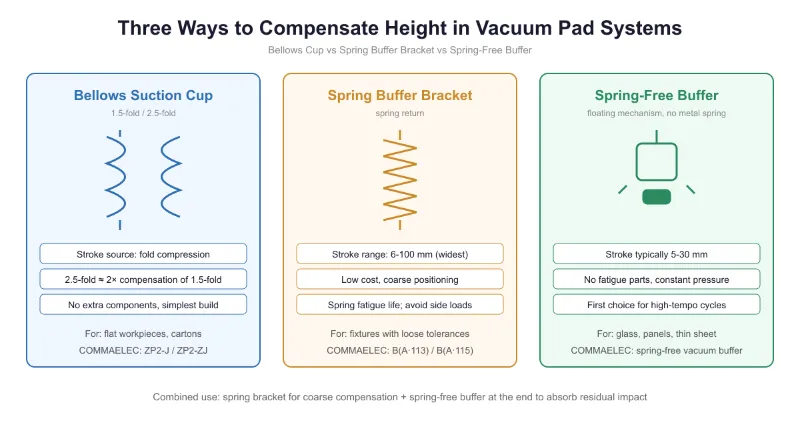
Three Ways to Compensate Height Differences
Method | Where the stroke comes from | Characteristics | Typical use
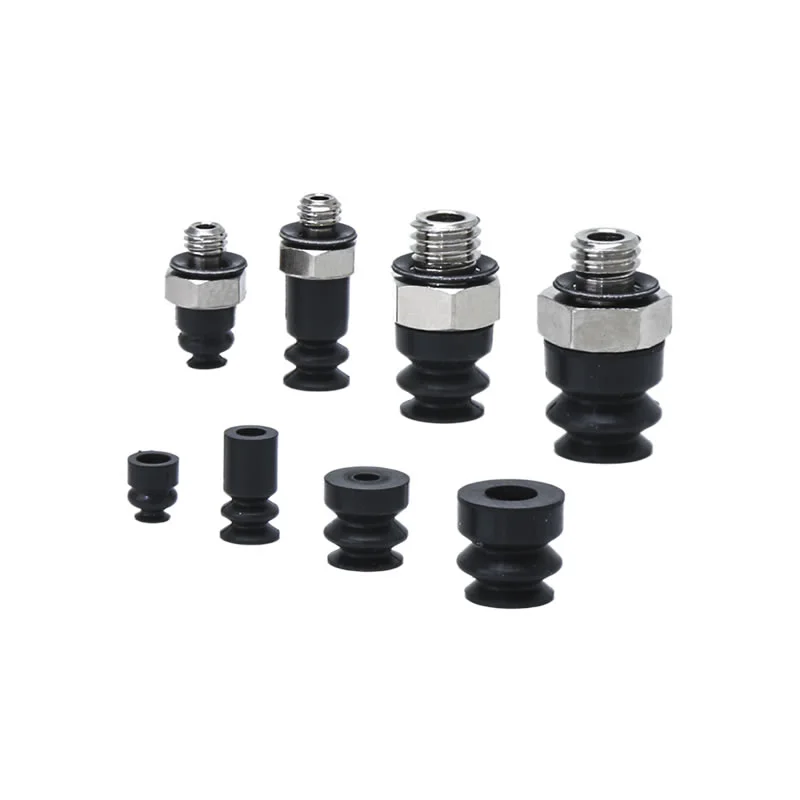
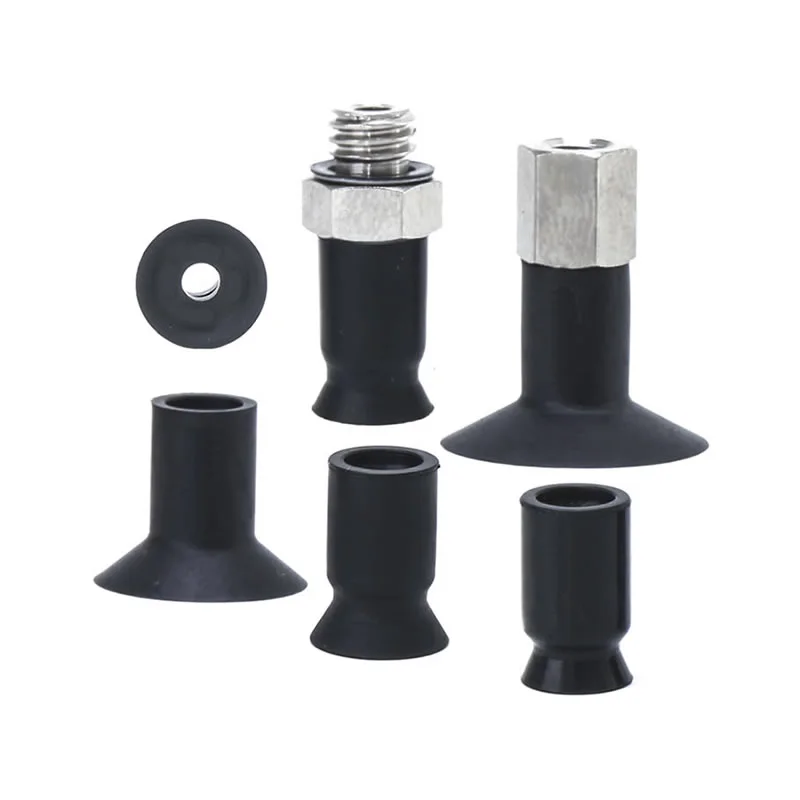
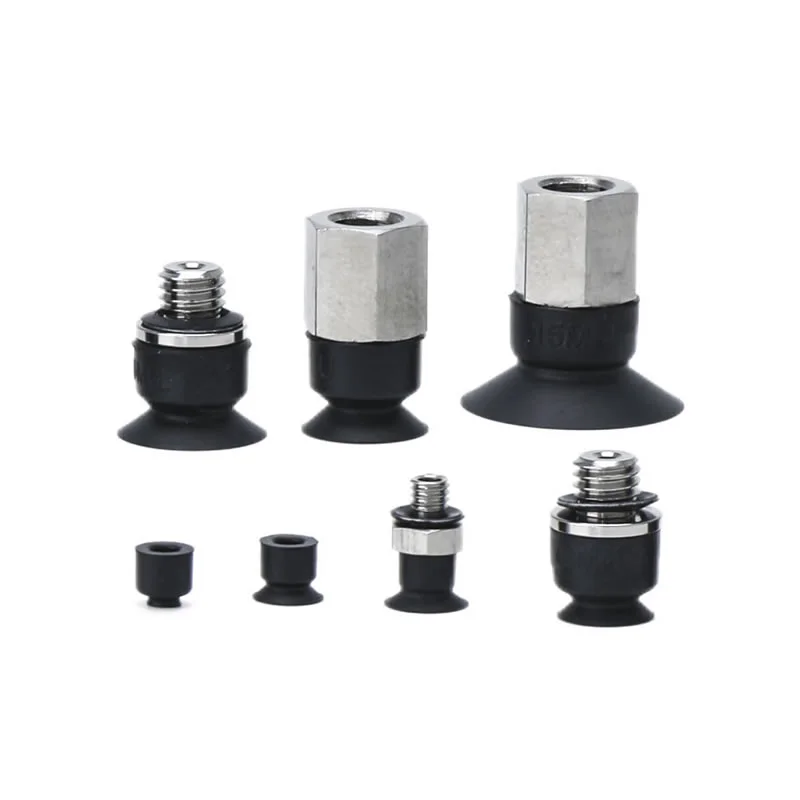
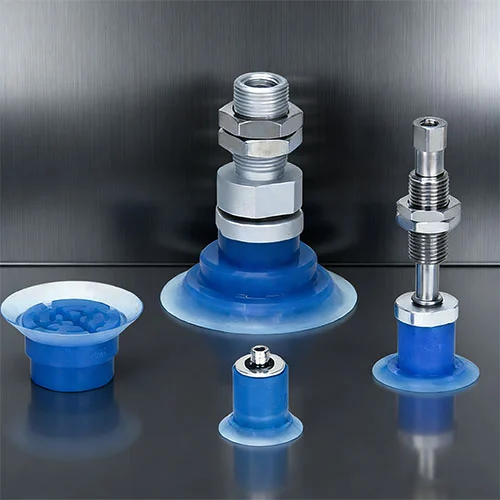
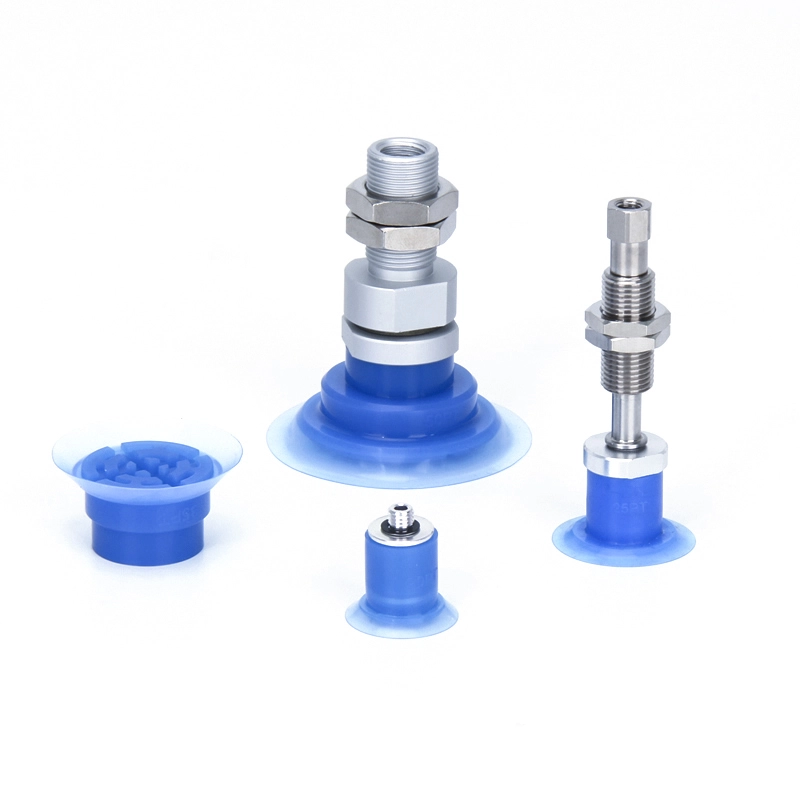
Bellows suction cup (1.5-fold / 2.5-fold) | Compression of the folds | No extra components; a 2.5-fold cup compensates roughly 2× the height of the same-size 1.5-fold cup | Flat workpieces and cartons with small height variation
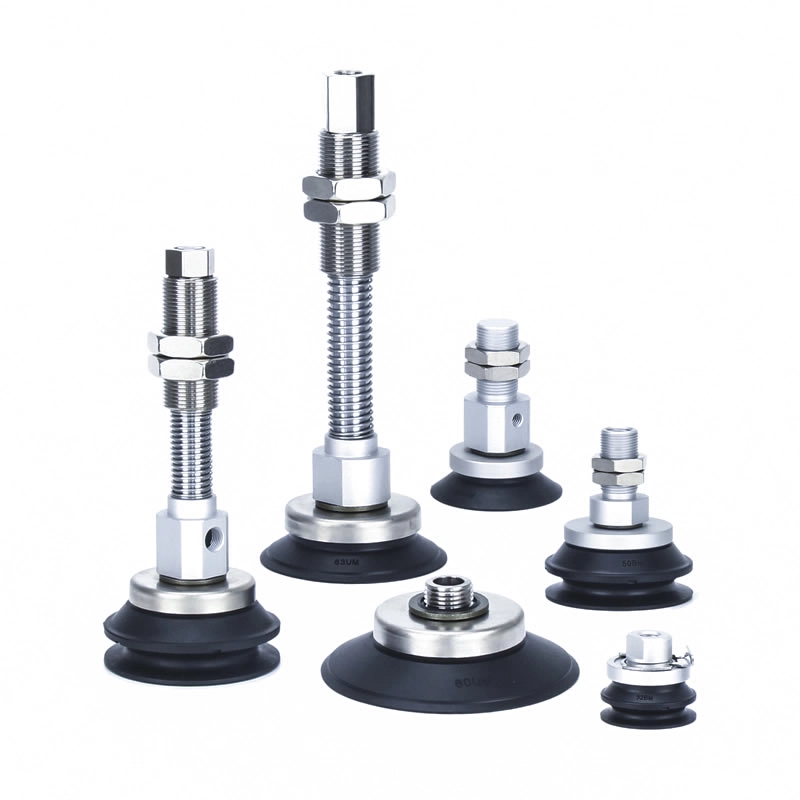
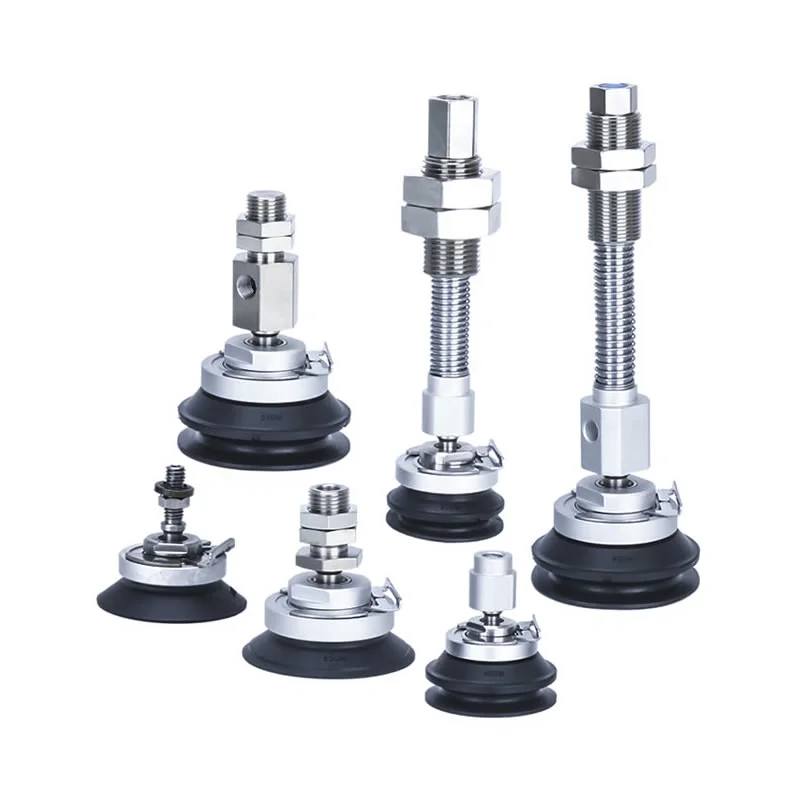
Spring buffer bracket | Spring return | Stroke range covers 6–100 mm at low cost; the spring has a fatigue life | General fixtures with loose positioning tolerances
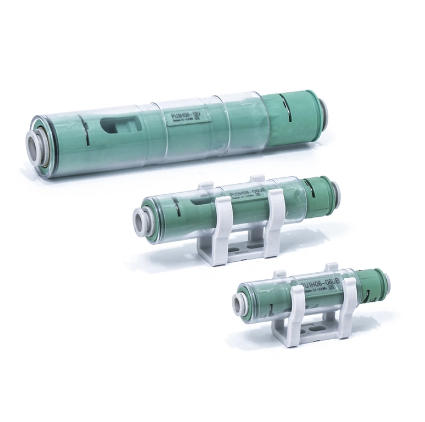
Spring-free vacuum buffer | Floating mechanism, no metal spring | Strokes typically 5–30 mm; stroke and contact pressure do not decay over cycles | High-tempo, impact-heavy handling of thin, shock-sensitive parts
Four Steps to the Right Stroke
1. Measure the height difference Δh across one grip point (maximum minus minimum).
2. Add the robot's Z-axis repeatability: typically ±0.1–0.5 mm; long-cantilever gantries can reach ±2 mm.
3. Reserve 2–5 mm of overshoot so the cup is never held on vacuum alone.
4. Required stroke = Δh + positioning error + overshoot, then round up to the next standard size.
Worked example: carton height variation of 8 mm + 1 mm positioning error + 3 mm overshoot = 12 mm → select the 15 mm size.
The Trade-Off: Spring vs Spring-Free
A spring buffer depends on spring return. After accumulated compression cycles, the free length decays and the effective stroke shrinks; side loads can jam the spring and tilt the cup, degrading the seal. A spring-free vacuum buffer has no metal fatigue parts, so contact pressure and response stay constant over millions of cycles — a good match for glass, panels, and other impact-sensitive workpieces. The trade-off is a narrower stroke range than large-travel spring brackets.
The two approaches are not mutually exclusive: use a spring bracket for coarse compensation over large height differences, then add a spring-free buffer at the end of the stack to absorb the residual impact.
Pitfalls to Avoid
· Stroke too large: the workpiece sinks in too deep, and every overshoot costs repeatability.
· Spring type under continuous side load: guide wear leads to jamming, cup misalignment, and poor sealing.
· Spring-free types still need inspection: check the seals every 6 months or roughly 1 million cycles, and replace at the first sign of leakage.
Matching COMMAELEC Components
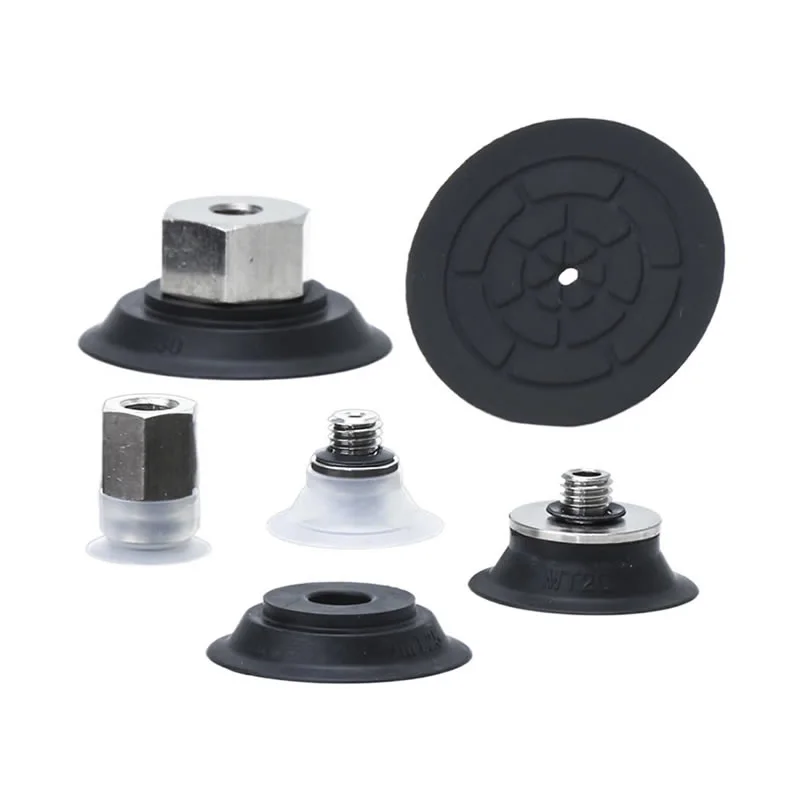
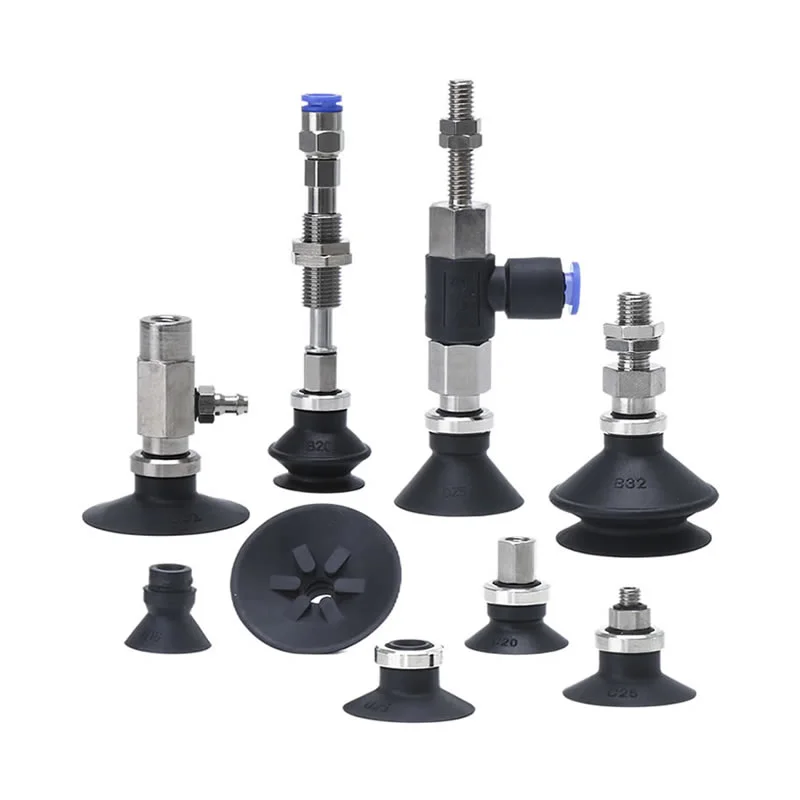
COMMAELEC covers all three compensation methods: ZP2-J / ZP2-ZJ bellows suction cups, B(A·113) internally spring-loaded buffer brackets, B(A·115) externally spring-loaded buffer brackets, D(A·112) low-friction recessed buffer brackets, and a spring-free vacuum buffer for high-cycle applications.
About COMMAELEC
Zhejiang Comma Electric Co., Ltd. manufactures vacuum pads, suction cups, vacuum generators, and vacuum accessories for automation lines in the glass, automotive, electronics, logistics, and packaging industries.
Illustrations (English-labeled)
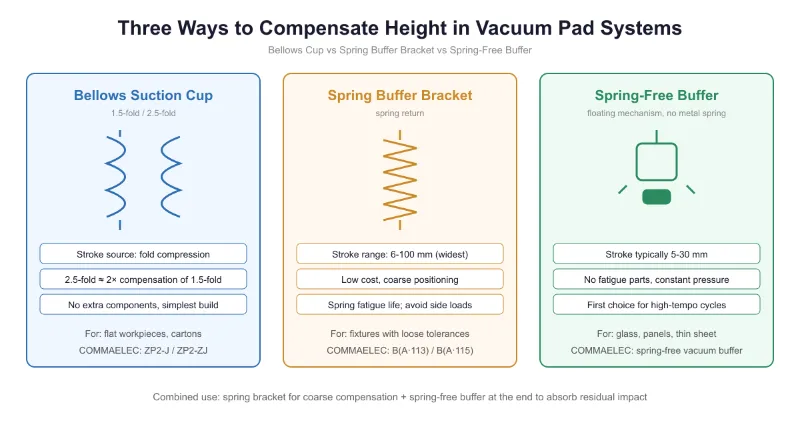
Fig.1 Three ways to compensate height in vacuum pad systems
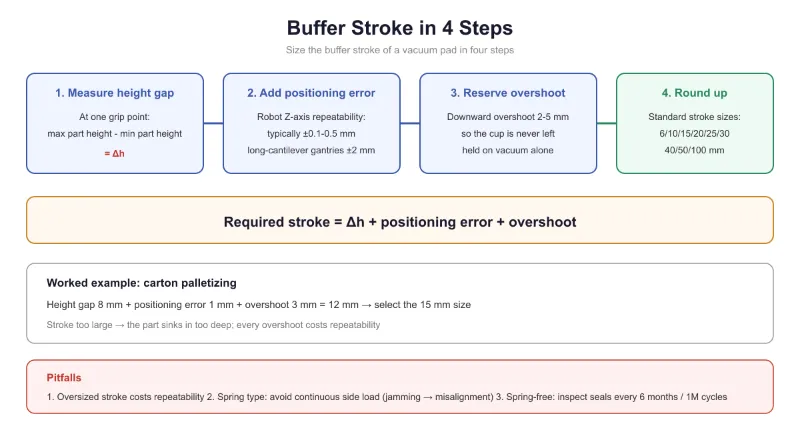
Fig.2 Buffer stroke in 4 steps
Related News
- The Simplest Technology Changes the World
- What Makes Vacuum Suction Cups the Essential Gripping Component in Smart Factories?
- Vacuum Pad Maintenance: A Practical Care Guide for Newcomers to Vacuum Handling
- Why Are Short-type Vacuum Suction Cups ZP2-MU Becoming a Smart Choice for Precision Automation
- Why Are No Spring Buffer Sponge Vacuum Suction Cups ZP2 a Smart Choice for High-Precision Automation
- How Can For Film Adsorption Vacuum Suction Cups ZP3P-PT Improve Flexible Film Handling in Industrial Automation
Leave me a message